
Geração de peptídeos bioativos usando flavourzyme: potenciais funcionais e aplicações emergentes
- Autores
-
-
- Palavras-chave:
- Hidrólise, Proteases, Peptídeos, Bioatividade, Tecnologia de alimentos
- Resumo
-
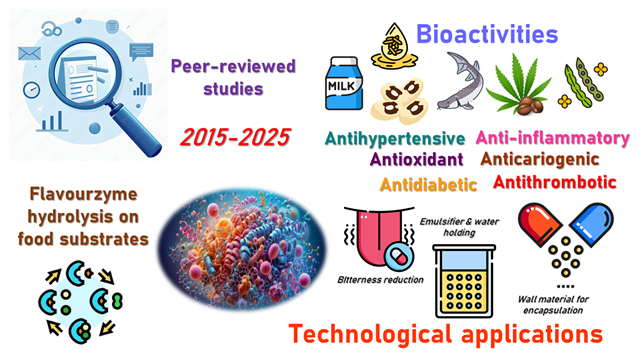
Peptídeos bioativos derivados de hidrólise enzimática têm atraído considerável atenção por seu potencial de uso em alimentos funcionais para prevenir doenças crônicas. Esta revisão teve como objetivo analisar o potencial funcional de peptídeos gerados por hidrólise mediada por Flavourzyme, a fim de apresentar uma visão geral das evidências científicas sobre suas características enzimáticas, especificidade do substrato, atividades biológicas relatadas e aplicações emergentes em sistemas alimentares. Uma abordagem de revisão narrativa foi adotada, com foco em estudos revisados por pares publicados entre 2015 e 2025. Flavourzyme, um complexo de protease de Aspergillus oryzae, apresenta atividades de endo- e exopeptidase que facilitam a degradação de proteínas e reduzem o amargor dos peptídeos. As bioatividades relatadas de seus hidrolisados incluem efeitos antioxidantes, inibidores da enzima conversora de angiotensina (ECA), inibidores da dipeptidil peptidase IV (DPP-IV) e anti-inflamatórios. Essas atividades foram observadas em diversas fontes de proteína, como laticínios, leguminosas, cereais e subprodutos de frutos do mar. A enzima também tem sido usada em estratégias de hidrólise sequencial com outras proteases, o que tem melhorado a bioatividade e os perfis sensoriais. Além disso, foram identificadas aplicações da Flavourzyme em processos tecnológicos que envolvem melhoria de textura, emulsificação, aumento da digestibilidade e sistemas de encapsulamento. Os resultados destacaram a versatilidade e a utilidade da enzima no desenvolvimento de ingredientes funcionais com efeitos benéficos à saúde. Este trabalho contribuiu para a identificação do escopo e da relevância da Flavourzyme no avanço de estratégias biotecnológicas voltadas ao desenvolvimento de alimentos funcionais.
- Downloads
-
Os dados de download ainda não estão disponíveis.
- Referências
-
Ahmadifard, N., Murueta, J. H. C., Abedian-Kenari, A., Motamedzadegan, A., & Jamali, H. (2016). Comparison the effect of three commercial enzymes for enzymatic hydrolysis of two substrates (rice bran protein concentrate and soy-been protein) with SDS-PAGE. Journal of Food Science and Technology, 53(2), 1279–1284. https://doi.org/10.1007/s13197-015-2087-6 DOI: https://doi.org/10.1007/s13197-015-2087-6
Ahtesh, F. B., Stojanovska, L., Mathai, M. L., Apostolopoulos, V., & Mishra, V. K. (2016). Proteolytic and angiotensin‐converting enzyme‐inhibitory activities of selected probiotic bacteria. International Journal of Food Science & Technology, 51(4), 865–874. https://doi.org/10.1111/ijfs.13054 DOI: https://doi.org/10.1111/ijfs.13054
Ahtesh, F. B., Stojanovska, L., Mishra, V., Donkor, O., Feehan, J., Bosevski, M., Mathai, M., & Apostolopoulos, V. (2021). Identification and effects of skim milk-derived bioactive antihypertensive peptides. Biologics, 2(1), 1–14. https://doi.org/10.3390/biologics2010001 DOI: https://doi.org/10.3390/biologics2010001
Ahtesh, F., Stojanovska, L., Shah, N., & Mishra, V. K. (2016). Effect of Flavourzyme ® on angiotensin‐converting enzyme inhibitory peptides formed in skim milk and whey protein concentrate during fermentation by Lactobacillus helveticus. Journal of Food Science, 81(1). https://doi.org/10.1111/1750-3841.13177 DOI: https://doi.org/10.1111/1750-3841.13177
Alahmad, K., Noman, A., Xia, W., Jiang, Q., & Xu, Y. (2023). Influence of the enzymatic hydrolysis using flavourzyme enzyme on functional, secondary structure, and antioxidant characteristics of protein hydrolysates produced from bighead carp (Hypophthalmichthys nobilis). Molecules, 28(2), 519. https://doi.org/10.3390/molecules28020519 DOI: https://doi.org/10.3390/molecules28020519
Asen, N. D., & Aluko, R. E. (2022). Acetylcholinesterase and butyrylcholinesterase inhibitory activities of antioxidant peptides obtained from enzymatic pea protein hydrolysates and their ultrafiltration peptide fractions. Journal of Food Biochemistry, 46(11). https://doi.org/10.1111/jfbc.14289 DOI: https://doi.org/10.1111/jfbc.14289
Bjørlie, M., Hartmann, J. C., Rasmussen, L. H., Yesiltas, B., Sørensen, A.-D. M., Gregersen Echers, S., & Jacobsen, C. (2024). Screening for metal-chelating activity in potato protein hydrolysates using surface plasmon resonance and peptidomics. Antioxidants, 13(3), 346. https://doi.org/10.3390/antiox13030346 DOI: https://doi.org/10.3390/antiox13030346
Cheng, Y.-H., Liu, B.-Q., Cui, B., Wen, L., Xu, Z., Chen, M.-L., & Wu, H. (2023). Alanine substitution to determine the effect of LR5 and YR6 rice peptide structure on antioxidant and anti-inflammatory activity. Nutrients, 15(10), 2373. https://doi.org/10.3390/nu15102373 DOI: https://doi.org/10.3390/nu15102373
Chiang, J. H., Loveday, S. M., Hardacre, A. K., & Parker, M. E. (2019). Effects of enzymatic hydrolysis treatments on the physicochemical properties of beef bone extract using endo‐ and exoproteases. International Journal of Food Science & Technology, 54(1), 111–120. https://doi.org/10.1111/ijfs.13911 DOI: https://doi.org/10.1111/ijfs.13911
Cruz-Chamorro, I., Santos-Sánchez, G., Bollati, C., Bartolomei, M., Li, J., Arnoldi, A., & Lammi, C. (2022). Hempseed (Cannabis sativa) peptides WVSPLAGRT and IGFLIIWV exert anti-inflammatory activity in the LPS-stimulated human hepatic cell line. Journal of Agricultural and Food Chemistry, 70(2), 577–583. https://doi.org/10.1021/acs.jafc.1c07520 DOI: https://doi.org/10.1021/acs.jafc.1c07520
Eberhardt, A., López, E. C., Marino, F., Mammarella, E. J., Manzo, R. M., & Sihufe, G. A. (2021). Whey protein hydrolysis with microbial proteases: Determination of kinetic parameters and bioactive properties for different reaction conditions. International Journal of Dairy Technology, 74(3), 489–504. https://doi.org/10.1111/1471-0307.12795 DOI: https://doi.org/10.1111/1471-0307.12795
Foong, L.-C., Imam, M. U., & Ismail, M. (2015). Iron-binding capacity of defatted rice bran hydrolysate and bioavailability of iron in Caco-2 Cells. Journal of Agricultural and Food Chemistry, 63(41), 9029–9036. https://doi.org/10.1021/acs.jafc.5b03420 DOI: https://doi.org/10.1021/acs.jafc.5b03420
Gerónimo‐Alonso, M., Ortíz‐Vázquez, E., Rodríguez‐Canto, W., Chel‐Guerrero, L., & Betancur‐Ancona, D. (2025). Antithrombotic and anticariogenic activity of peptide fractions from cowpea (Vigna unguiculata) protein hydrolysates. Journal of the Science of Food and Agriculture, 105(1), 209–217. https://doi.org/10.1002/jsfa.13819 DOI: https://doi.org/10.1002/jsfa.13819
Ghulam, A., Arif, M., Unar, A., A. Thafar, M., Albaradei, S., & Worachartcheewan, A. (2025). StackAHTPs: An explainable antihypertensive peptides identifier based on heterogeneous features and stacked learning approach. IET Systems Biology, 19(1). https://doi.org/10.1049/syb2.70002 DOI: https://doi.org/10.1049/syb2.70002
Gui, M., Gao, L., Rao, L., Li, P., Zhang, Y., Han, J., & Li, J. (2022). Bioactive peptides identified from enzymatic hydrolysates of sturgeon skin. Journal of the Science of Food and Agriculture, 102(5), 1948–1957. https://doi.org/10.1002/jsfa.11532 DOI: https://doi.org/10.1002/jsfa.11532
Helal, A., Cattivelli, A., Conte, A., & Tagliazucchi, D. (2023). Effect of ripening and in vitro digestion on bioactive peptides profile in Ras cheese and their biological activities. Biology, 12(7), 948. https://doi.org/10.3390/biology12070948 DOI: https://doi.org/10.3390/biology12070948
Hernandez, L. M. R., & de Mejia, E. G. (2019). Enzymatic production, bioactivity, and bitterness of chickpea (Cicer arietinum) peptides. Comprehensive Reviews in Food Science and Food Safety, 18(6), 1913–1946. https://doi.org/10.1111/1541-4337.12504 DOI: https://doi.org/10.1111/1541-4337.12504
Hunsakul, K., Laokuldilok, T., Sakdatorn, V., Klangpetch, W., Brennan, C. S., & Utama-ang, N. (2022). Optimization of enzymatic hydrolysis by alcalase and flavourzyme to enhance the antioxidant properties of jasmine rice bran protein hydrolysate. Scientific Reports, 12(1), 12582. https://doi.org/10.1038/s41598-022-16821-z DOI: https://doi.org/10.1038/s41598-022-16821-z
Hwang, C., Chen, Y., Luo, C., & Chiang, W. (2016). Antioxidant and antibacterial activities of peptide fractions from flaxseed protein hydrolysed by protease from Bacillus altitudinis HK02. International Journal of Food Science & Technology, 51(3), 681–689. https://doi.org/10.1111/ijfs.13030 DOI: https://doi.org/10.1111/ijfs.13030
Inkanuwat, A., Sukaboon, R., Reamtong, O., Asawanonda, P., Pattaratanakun, A., Saisavoey, T., Sangtanoo, P., & Karnchanatat, A. (2019). Nitric oxide synthesis inhibition and anti-inflammatory effect of polypeptide isolated from chicken feather meal in lipopolysaccharide-stimulated RAW 264.7 macrophages. Food Technology and Biotechnology, 57(2), 200–212. https://doi.org/10.17113/ftb.57.02.19.5964 DOI: https://doi.org/10.17113/ftb.57.02.19.5964
Intiquilla, A., Jiménez‐Aliaga, K., Guzmán, F., Alvarez, C. A., Zavaleta, A. I., Izaguirre, V., & Hernández‐Ledesma, B. (2019). Novel antioxidant peptides obtained by alcalase hydrolysis of Erythrina edulis (pajuro) protein. Journal of the Science of Food and Agriculture, 99(5), 2420–2427. https://doi.org/10.1002/jsfa.9449 DOI: https://doi.org/10.1002/jsfa.9449
Ishikawa, Y., Hira, T., Inoue, D., Harada, Y., Hashimoto, H., Fujii, M., Kadowaki, M., & Hara, H. (2015). Rice protein hydrolysates stimulate GLP-1 secretion, reduce GLP-1 degradation, and lower the glycemic response in rats. Food & Function, 6(8), 2525–2534. https://doi.org/10.1039/C4FO01054J DOI: https://doi.org/10.1039/C4FO01054J
Ji, T., Xu, G., Wu, Y., Wang, Y., Xiao, C., Zhang, B., Xu, B., & Xu, F. (2024). Amelioration of type 2 diabetes mellitus using rapeseed (Brassica napus)-derived peptides through stimulating calcium-sensing receptor: effects on glucagon-like peptide-1 secretion and hepatic lipid metabolism. Journal of Agricultural and Food Chemistry, 72(43), 23804–23818. https://doi.org/10.1021/acs.jafc.4c03987 DOI: https://doi.org/10.1021/acs.jafc.4c03987
Jiang, Y., Li, S., Jiang, L., Mu, G., & Jiang, S. (2025). Immunomodulatory activity and molecular mechanisms of action of peptides derived from casein hydrolysate by alcalase and flavourzyme based on virtual screening. Journal of Dairy Science, 108(3), 2152–2168. https://doi.org/10.3168/jds.2024-25224 DOI: https://doi.org/10.3168/jds.2024-25224
Jogi, N., Mathew, A., & Mamatha, B. S. (2024). Modification of bioactive properties in food protein hydrolysates by alcalase and trypsin. Journal of Health and Allied Sciences NU, 14(S 01), S26–S34. https://doi.org/10.1055/s-0044-1782643 DOI: https://doi.org/10.1055/s-0044-1782643
Karamać, M., Kosińska-Cagnazzo, A., & Kulczyk, A. (2016). Use of different proteases to obtain flaxseed protein hydrolysates with antioxidant activity. International Journal of Molecular Sciences, 17(7), 1027. https://doi.org/10.3390/ijms17071027 DOI: https://doi.org/10.3390/ijms17071027
Karami, Z., Butkinaree, C., Somsong, P., & Duangmal, K. (2023). Assessment of the DPP‐IV inhibitory potential of mung bean and adzuki bean protein hydrolysates using enzymatic hydrolysis process: specificity of peptidases and novel peptides. International Journal of Food Science & Technology, 58(6), 2995–3005. https://doi.org/10.1111/ijfs.16422 DOI: https://doi.org/10.1111/ijfs.16422
Karimi, A., Azizi, M. H., & Ahmadi Gavlighi, H. (2020). Fractionation of hydrolysate from corn germ protein by ultrafiltration: In vitro antidiabetic and antioxidant activity. Food Science & Nutrition, 8(5), 2395–2405. https://doi.org/10.1002/fsn3.1529 DOI: https://doi.org/10.1002/fsn3.1529
Kasiwut, J., Youravong, W., & Sirinupong, N. (2019). Angiotensin I‐converting enzyme inhibitory peptides produced from tuna cooking juice hydrolysate by continuous enzymatic membrane reactor. Journal of Food Biochemistry, 43(12). https://doi.org/10.1111/jfbc.13058 DOI: https://doi.org/10.1111/jfbc.13058
Kim, S. H., Roy, P. K., & Park, S. Y. (2024). Synergistic effects of combined flavourzyme and floating electrode–dielectric barrier discharge plasma on reduction of Escherichia coli biofilms in squid (Todarodes pacificus). Microorganisms, 12(6), 1188. https://doi.org/10.3390/microorganisms12061188 DOI: https://doi.org/10.3390/microorganisms12061188
Lammi, C., Bollati, C., Ferruzza, S., Ranaldi, G., Sambuy, Y., & Arnoldi, A. (2018). Soybean- and lupin-derived peptides inhibit DPP-IV activity on in situ human intestinal Caco-2 cells and ex vivo human serum. Nutrients, 10(8), 1082. https://doi.org/10.3390/nu10081082 DOI: https://doi.org/10.3390/nu10081082
Mao, Y., Chen, L., Zhang, L., Bian, Y., & Meng, C. (2023). Synergistic hydrolysis of soy proteins using immobilized proteases: assessing peptide profiles. Foods, 12(22), 4115. https://doi.org/10.3390/foods12224115 DOI: https://doi.org/10.3390/foods12224115
Matos, F. M. de, Sales, A. C. de A., Tavares, G. M., & Castro, R. J. S. de. (2025). Effects of the Maillard reaction on the antioxidant and antihypertensive properties of black cricket (Gryllus assimilis) protein hydrolysates. ACS Food Science & Technology, 5(4), 1365–1373. https://doi.org/10.1021/acsfoodscitech.4c00947 DOI: https://doi.org/10.1021/acsfoodscitech.4c00947
Mazorra-Manzano, M. A., Ramírez-Suarez, J. C., & Yada, R. Y. (2018). Plant proteases for bioactive peptides release: A review. Critical Reviews in Food Science and Nutrition, 58(13), 2147–2163. https://doi.org/10.1080/10408398.2017.1308312 DOI: https://doi.org/10.1080/10408398.2017.1308312
Merz, M., Eisele, T., Berends, P., Appel, D., Rabe, S., Blank, I., Stressler, T., & Fischer, L. (2015). Flavourzyme, an enzyme preparation with industrial relevance: automated nine-step purification and partial characterization of eight enzymes. Journal of Agricultural and Food Chemistry, 63(23), 5682–5693. https://doi.org/10.1021/acs.jafc.5b01665 DOI: https://doi.org/10.1021/acs.jafc.5b01665
Mirzaee, H., Ahmadi Gavlighi, H., Nikoo, M., Udenigwe, C. C., Rezvankhah, A., & Khodaiyan, F. (2024). Improved antioxidant, antihypertensive, and antidiabetic activities and tailored emulsion stability and foaming properties of mixture of corn gluten and soy protein hydrolysates via enzymatic processing and fractionation. Food Science & Nutrition, 12(11), 9749–9763. https://doi.org/10.1002/fsn3.4532 DOI: https://doi.org/10.1002/fsn3.4532
Mora-Melgem, J. A., Arámburo-Gálvez, J. G., Cárdenas-Torres, F. I., Gonzalez-Santamaria, J., Ramírez-Torres, G. I., Arvizu-Flores, A. A., Figueroa-Salcido, O. G., & Ontiveros, N. (2023). Dipeptidyl peptidase IV inhibitory peptides from chickpea proteins (Cicer arietinum L.): pharmacokinetics, molecular interactions, and multi-bioactivities. Pharmaceuticals, 16(8), 1109. https://doi.org/10.3390/ph16081109 DOI: https://doi.org/10.3390/ph16081109
Naji, A. M., & Çam, M. (2025). Comparative analysis of milk casein hydrolysates from cow, water buffalo, goat and sheep: effects of flavourzyme and neutrase on formation of bioactive peptides. Journal of Food Measurement and Characterization, 19(1), 341–355. https://doi.org/10.1007/s11694-024-02972-2 DOI: https://doi.org/10.1007/s11694-024-02972-2
O’Sullivan, D., Nongonierma, A. B., & FitzGerald, R. J. (2017). Bitterness in sodium caseinate hydrolysates: role of enzyme preparation and degree of hydrolysis. Journal of the Science of Food and Agriculture, 97(13), 4652–4655. https://doi.org/10.1002/jsfa.8306 DOI: https://doi.org/10.1002/jsfa.8306
Oliveira, L. de C., Martinez-Villaluenga, C., Frias, J., Elena Cartea, M., Francisco, M., Cristianini, M., & Peñas, E. (2024). High pressure-assisted enzymatic hydrolysis potentiates the production of quinoa protein hydrolysates with antioxidant and ACE-inhibitory activities. Food Chemistry, 447, 138887. https://doi.org/10.1016/j.foodchem.2024.138887 DOI: https://doi.org/10.1016/j.foodchem.2024.138887
Peighambardoust, S. H., Karami, Z., Pateiro, M., & Lorenzo, J. M. (2021). A review on health-promoting, biological, and functional aspects of bioactive peptides in food applications. Biomolecules, 11(5), 631. https://doi.org/10.3390/biom11050631 DOI: https://doi.org/10.3390/biom11050631
Rezvankhah, A., Yarmand, M. S., Ghanbarzadeh, B., & Mirzaee, H. (2021a). Characterization of bioactive peptides produced from green lentil (Lens culinaris) seed protein concentrate using Alcalase and Flavourzyme in single and sequential hydrolysis. Journal of Food Processing and Preservation, 45(11). https://doi.org/10.1111/jfpp.15932 DOI: https://doi.org/10.1111/jfpp.15932
Rezvankhah, A., Yarmand, M. S., Ghanbarzadeh, B., & Mirzaee, H. (2021b). Generation of bioactive peptides from lentil protein: degree of hydrolysis, antioxidant activity, phenol content, ACE-inhibitory activity, molecular weight, sensory, and functional properties. Journal of Food Measurement and Characterization, 15(6), 5021–5035. https://doi.org/10.1007/s11694-021-01077-4 DOI: https://doi.org/10.1007/s11694-021-01077-4
Rezvankhah, A., Yarmand, M. S., Ghanbarzadeh, B., & Mirzaee, H. (2023). Development of lentil peptides with potent antioxidant, antihypertensive, and antidiabetic activities along with umami taste. Food Science & Nutrition, 11(6), 2974–2989. https://doi.org/10.1002/fsn3.3279 DOI: https://doi.org/10.1002/fsn3.3279
Rocha, T. de S., Hernandez, L. M. R., Mojica, L., Johnson, M. H., Chang, Y. K., & de Mejía, E. G. (2015). Germination of Phaseolus vulgaris and alcalase hydrolysis of its proteins produced bioactive peptides capable of improving markers related to type-2 diabetes in vitro. Food Research International, 76, 150–159. https://doi.org/10.1016/j.foodres.2015.04.041 DOI: https://doi.org/10.1016/j.foodres.2015.04.041
Saetang, J., Haewphet, T., Nilsuwan, K., & Benjakul, S. (2025). ACE- and DPP-IV-inhibitory peptides from Bambara groundnut hydrolysate: elucidation using computational tools and molecular docking. Biology, 14(5), 511. https://doi.org/10.3390/biology14050511 DOI: https://doi.org/10.3390/biology14050511
Shi, M., Ahtesh, F., Mathai, M., McAinch, A. J., & Su, X. Q. (2017). Effects of fermentation conditions on the potential anti‐hypertensive peptides released from yogurt fermented by Lactobacillus helveticus and Flavourzyme ®. International Journal of Food Science & Technology, 52(1), 137–145. https://doi.org/10.1111/ijfs.13253 DOI: https://doi.org/10.1111/ijfs.13253
Suaste, N. I. J., Chel-Guerrero, L., Betancur- Ancona, D., & Bustillos, R. Z. (2023). Antioxidant and inhibitory activities of α-amylase, α-glucosidase and angiotensin-I of protein hydrolysates from “Sac-Beh” quality protein maize (QPM). Emirates Journal of Food and Agriculture. https://doi.org/10.9755/ejfa.2023.3107 DOI: https://doi.org/10.9755/ejfa.2023.3107
Sukkhown, P., Pirak, T., Jangchud, K., & Prinyawiwatkul, W. (2021). Novel peptides from dried squid head by‐products obtained from snack process. International Journal of Food Science & Technology, 56(11), 5506–5517. https://doi.org/10.1111/ijfs.15085 DOI: https://doi.org/10.1111/ijfs.15085
Sun, P., Du, W., Zheng, Y., Sun, Q., Wu, X., Zhao, Q., Mu, G., Ma, C., Li, Z., & Kong, F. (2025). Effects of Alcalase and Flavourzyme from different manufacturers on the antigenicity and mechanisms of β-lactoglobulin. LWT, 232, 118276. https://doi.org/10.1016/j.lwt.2025.118276 DOI: https://doi.org/10.1016/j.lwt.2025.118276
Tang, Y., Debnath, T., Choi, E.-J., Kim, Y. W., Ryu, J. P., Jang, S., Chung, S. U., Choi, Y.-J., & Kim, E.-K. (2018). Changes in the amino acid profiles and free radical scavenging activities of Tenebrio molitor larvae following enzymatic hydrolysis. PLOS ONE, 13(5), e0196218. https://doi.org/10.1371/journal.pone.0196218 DOI: https://doi.org/10.1371/journal.pone.0196218
Tejasari, T., Aulia, F., & Agustina, N. (2021). Inhibiting activity of angiotensin converting enzyme-1 by bean protein hydrolysate genus Phaseolus. Jurnal Penelitian Pascapanen Pertanian, 18(2), 75. https://doi.org/10.21082/jpasca.v18n2.2021.75-86 DOI: https://doi.org/10.21082/jpasca.v18n2.2021.75-86
Uraipong, C., & Zhao, J. (2016). Rice bran protein hydrolysates exhibit strong in vitro α ‐amylase, β ‐glucosidase and ACE ‐inhibition activities. Journal of the Science of Food and Agriculture, 96(4), 1101–1110. https://doi.org/10.1002/jsfa.7182 DOI: https://doi.org/10.1002/jsfa.7182
Waglay, A., & Karboune, S. (2016). Enzymatic generation of peptides from potato proteins by selected proteases and characterization of their structural properties. Biotechnology Progress, 32(2), 420–429. https://doi.org/10.1002/btpr.2245 DOI: https://doi.org/10.1002/btpr.2245
Wang, D., Zhang, M., Zou, Y., Sun, Z., & Xu, W. (2018). Optimization of flavourzyme hydrolysis condition for the preparation of antioxidant peptides from duck meat using response surface methodology. The Journal of Poultry Science, 55(3), 217–223. https://doi.org/10.2141/jpsa.0160155 DOI: https://doi.org/10.2141/jpsa.0160155
Wang, L.-S., Huang, J.-C., Chen, Y.-L., Huang, M., & Zhou, G.-H. (2015). Identification and characterization of antioxidant peptides from enzymatic hydrolysates of duck meat. Journal of Agricultural and Food Chemistry, 63(13), 3437–3444. https://doi.org/10.1021/jf506120w DOI: https://doi.org/10.1021/jf506120w
Xia, X., Song, S., Zhou, T., Zhang, H., Cui, H., Zhang, F., Hayat, K., Zhang, X., & Ho, C.-T. (2023). Preparation of saltiness-enhancing enzymatic hydrolyzed pea protein and identification of the functional small peptides of salt reduction. Journal of Agricultural and Food Chemistry, 71(21), 8140–8149. https://doi.org/10.1021/acs.jafc.3c02046 DOI: https://doi.org/10.1021/acs.jafc.3c02046
Yao, H., Yang, J., Zhan, J., Lu, Q., Su, M., & Jiang, Y. (2021). Preparation, amino acid composition, and in vitro antioxidant activity of okra seed meal protein hydrolysates. Food Science & Nutrition, 9(6), 3059–3070. https://doi.org/10.1002/fsn3.2263 DOI: https://doi.org/10.1002/fsn3.2263
Zhang, H., Zhang, Y., Javed, M., Cheng, M., Xiong, S., & Liu, Y. (2022). Gelatin hydrolysates from sliver carp (Hypophthalmichthys molitrix) improve the antioxidant and cryoprotective properties of unwashed frozen fish mince. International Journal of Food Science & Technology, 57(5), 2619–2627. https://doi.org/10.1111/ijfs.15121 DOI: https://doi.org/10.1111/ijfs.15121
Zhang, M., Zhu, L., Wu, G., Liu, T., Qi, X., & Zhang, H. (2022). Rapid screening of novel dipeptidyl peptidase-4 inhibitory peptides from pea (Pisum sativum L.) protein using peptidomics and molecular docking. Journal of Agricultural and Food Chemistry, 70(33), 10221–10228. https://doi.org/10.1021/acs.jafc.2c03949 DOI: https://doi.org/10.1021/acs.jafc.2c03949
Zhang, Y., Ke, H., Bai, T., Chen, C., Guo, T., Mu, Y., Li, H., Liao, W., Pan, Z., & Zhao, L. (2021). Characterization of umami compounds in bone meal hydrolysate. Journal of Food Science, 86(6), 2264–2275. https://doi.org/10.1111/1750-3841.15751 DOI: https://doi.org/10.1111/1750-3841.15751
Zhao, X., Cheng, Y., Xu, J., & Cui, C. (2025). Dopamine-modified hydrated silica immobilized Flavourzyme for efficient bioactive peptide release from β-lactoglobulin. Food Chemistry, 487, 144725. https://doi.org/10.1016/j.foodchem.2025.144725 DOI: https://doi.org/10.1016/j.foodchem.2025.144725
Zheng, Y., Wang, X., Zhuang, Y., Li, Y., Shi, P., Tian, H., Li, X., & Chen, X. (2020). Isolation of novel ACE‐inhibitory peptide from naked oat globulin hydrolysates in silico approach: Molecular docking, in vivo antihypertension and effects on renin and intracellular endothelin‐1. Journal of Food Science, 85(4), 1328–1337. https://doi.org/10.1111/1750-3841.15115 DOI: https://doi.org/10.1111/1750-3841.15115
- Cover Image
-
- Downloads
- Publicado
- 2025-11-28
- Edição
- v. 4 n. 1 (2025)
- Seção
- Artigo de Revisão
- Licença
-
Direitos autorais (c) 2025 Yair Noé Ávila-Vargas, Laura García-Curiel, Jesús Guadalupe Pérez-Flores, Gabriela Mariana Rodríguez-Serrano, Elizabeth Contreras-López, Luis Guillermo González-Olivares, Rita Paz-Samaniego, Emmanuel Pérez-Escalante

Este trabalho está licenciado sob uma licença Creative Commons Attribution 4.0 International License.
Esta revista publica seus artigos em Acesso Aberto sob licença Creative Commons (CC BY 4.0).
Você é livre para:
Compartilhar — copie e redistribua o material em qualquer meio ou formato para qualquer finalidade, inclusive comercial.
Adaptar – remixar, transformar e desenvolver o material para qualquer finalidade, até mesmo comercial.
O licenciante não pode revogar essas liberdades desde que você siga os termos da licença.
Nos seguintes termos:
Atribuição — Você deve dar o devido crédito, fornecer um link para a licença e indicar se foram feitas alterações. Você pode fazê-lo de qualquer maneira razoável, mas não de forma que sugira que o licenciante endossa você ou seu uso.
Sem restrições adicionais — Você não pode aplicar termos legais ou medidas tecnológicas que restrinjam legalmente outras pessoas de fazerem qualquer coisa que a licença permita.
Avisos:
Você não precisa cumprir a licença para elementos do material de domínio público ou onde seu uso for permitido por uma exceção ou limitação aplicável.Nenhuma garantia é dada. A licença pode não conceder todas as permissões necessárias para o uso pretendido. Por exemplo, outros direitos, como publicidade, privacidade ou direitos morais, podem limitar a forma como você utiliza o material.

Como Citar




Artigos Semelhantes
- Itzury Reyes-Ramírez, Jesús Guadalupe Pérez-Flores , Laura García-Curiel , Luis Guillermo González-Olivares , Elizabeth Contreras-López , Laura Berenice Olvera-Rosales , Emmanuel Pérez-Escalante, Produção científica sobre hidrólise enzimática do soro de leite bovino e seus peptídeos bioativos: Uma abordagem bibliométrica , Food Science Today: v. 4 n. 1 (2025)
- Beatriz de Aquino Marques da Costa, Ana Lúcia Figueiredo Porto, Vagne de Melo Oliveira, Tatiana Souza Porto, Peptídeos bioativos de colágeno: abordagem bibliométrica e tendências de mercado para fontes aquáticas , Food Science Today: v. 2 n. 1 (2023)
- Zaira Daniela Solís-Macías, Jesús Guadalupe Pérez-Flores , Laura García-Curiel , Luis Guillermo González-Olivares , Gabriela Mariana Rodríguez-Serrano, Elizabeth Contreras-López , Alexis Ayala-Niño , Emmanuel Pérez-Escalante, Bactérias lácticas na fermentação do trigo: uma análise bibliométrica da produção de peptídeos antioxidantes , Food Science Today: v. 4 n. 1 (2025)
- Luis Alberto Mendoza-Flores, Jesús Guadalupe Pérez Flores, Laura García-Curiel, Alma Elizabeth Cruz-Guerrero, Emmanuel Pérez-Escalante, Elizabeth Contreras-López, Luis Guillermo González-Olivares, Soro de leite como ingrediente funcional na indústria alimentícia: um estudo bibliométrico sobre seu potencial e inovação , Food Science Today: v. 4 n. 1 (2025)
- Gerson Lopes Teixeira, Bruno Luís Ferreira, O impacto da ciência de alimentos brasileira ao longo das últimas duas décadas. Uma revisão crítica e meta-análise , Food Science Today: v. 1 n. 1 (2023)
- Gabriela Hernández-Lozada, Jesús Guadalupe Pérez-Flores , Laura García-Curiel , Luis Guillermo González-Olivares , Elizabeth Contreras-López , Meyli Claudia Escobar-Ramírez , Emmanuel Pérez-Escalante, Aplicação de bacteriocinas na preservação e segurança de alimentos: uma abordagem de análise bibliométrica , Food Science Today: v. 4 n. 1 (2025)
- Joana Filipa Furtado Goulart, Alexandre Correia Pereira, Ana Sofia Ribeiro de Oliveira, António Manuel Barros Marques, Inês do Carmo Alves Martins, Impacto de diferentes métodos culinários na composição proximal química e em ácidos graxos do goraz (Pagellus bogaraveo) e do boca negra (Helicolenus dactylopterus) provenientes do Arquipélago dos Açores (Portugal) no Atlântico Norte , Food Science Today: v. 4 n. 1 (2025)
Você também pode iniciar uma pesquisa avançada por similaridade para este artigo.
Artigos mais lidos pelo mesmo(s) autor(es)
- Zaira Daniela Solís-Macías, Jesús Guadalupe Pérez-Flores , Laura García-Curiel , Luis Guillermo González-Olivares , Gabriela Mariana Rodríguez-Serrano, Elizabeth Contreras-López , Alexis Ayala-Niño , Emmanuel Pérez-Escalante, Bactérias lácticas na fermentação do trigo: uma análise bibliométrica da produção de peptídeos antioxidantes , Food Science Today: v. 4 n. 1 (2025)
- Gabriela Hernández-Lozada, Jesús Guadalupe Pérez-Flores , Laura García-Curiel , Luis Guillermo González-Olivares , Elizabeth Contreras-López , Meyli Claudia Escobar-Ramírez , Emmanuel Pérez-Escalante, Aplicação de bacteriocinas na preservação e segurança de alimentos: uma abordagem de análise bibliométrica , Food Science Today: v. 4 n. 1 (2025)
- Itzury Reyes-Ramírez, Jesús Guadalupe Pérez-Flores , Laura García-Curiel , Luis Guillermo González-Olivares , Elizabeth Contreras-López , Laura Berenice Olvera-Rosales , Emmanuel Pérez-Escalante, Produção científica sobre hidrólise enzimática do soro de leite bovino e seus peptídeos bioativos: Uma abordagem bibliométrica , Food Science Today: v. 4 n. 1 (2025)
- Luis Alberto Mendoza-Flores, Jesús Guadalupe Pérez Flores, Laura García-Curiel, Alma Elizabeth Cruz-Guerrero, Emmanuel Pérez-Escalante, Elizabeth Contreras-López, Luis Guillermo González-Olivares, Soro de leite como ingrediente funcional na indústria alimentícia: um estudo bibliométrico sobre seu potencial e inovação , Food Science Today: v. 4 n. 1 (2025)